Burton was a real town in Rabun County, Georgia, and it is still there, under about 65 feet of Lake Burton. Starting in 1917, Georgia Railway and Power, a predecessor of Georgia Power, bought the town and much of the land around it, according to the Rabun County Historical Society. The dam was finished in December 1919, and by August 1920 the valley was a lake. The lake kept the town’s name.
This is the story of what was bought, what was flooded and why, told only from sources we could check. Where a well-known story could not be confirmed, we say so.
What Georgia Railway and Power bought
The buying began in 1917. The Historical Society says Georgia Railway and Power set out to acquire the entire town of Burton and much of the surrounding land, and that 65 property owners eventually sold thousands of acres to the company. Those families did not go far. They moved to higher ground in the Tallulah valley, or settled in Tiger and in Habersham County.
Sixty-five is a count of the owners who sold, not a census of everyone who lived in Burton. We have not found a primary source for the town’s population, so we do not give one here.
Georgia Railway and Power, a predecessor of Georgia Power, began buying the town of Burton and much of the land around it in 1917. Sixty-five property owners sold, and their families moved to higher ground in the Tallulah valley or to Tiger and Habersham County. (Rabun County Historical Society, checked Oct 18, 2026)
Why a town was in the way
The short answer is falling water and a growing city. The Tallulah and Tugalo rivers drop 1,200 feet along a 26-mile stretch through Rabun, Habersham and Stephens counties, which the Historical Society calls ideal for hydroelectric plants. Between 1913 and 1927, six dams and generating stations went in along that stretch, and together they sent 166,420 kilowatts of power to Atlanta.
Burton sat at the top of that chain. Going downstream, the six developments are Burton (Lake Burton), Nacoochee (Lake Seed), Mathis Dam and the Terrora plant (Lake Rabun), Tallulah Falls (Lake Tallulah), Tugalo and Yonah. A reservoir at the head of the river could hold water back in wet months and let it go when the plants below needed it. The valley where that reservoir had to go was the valley where Burton stood.
A storage dam first, a power plant later
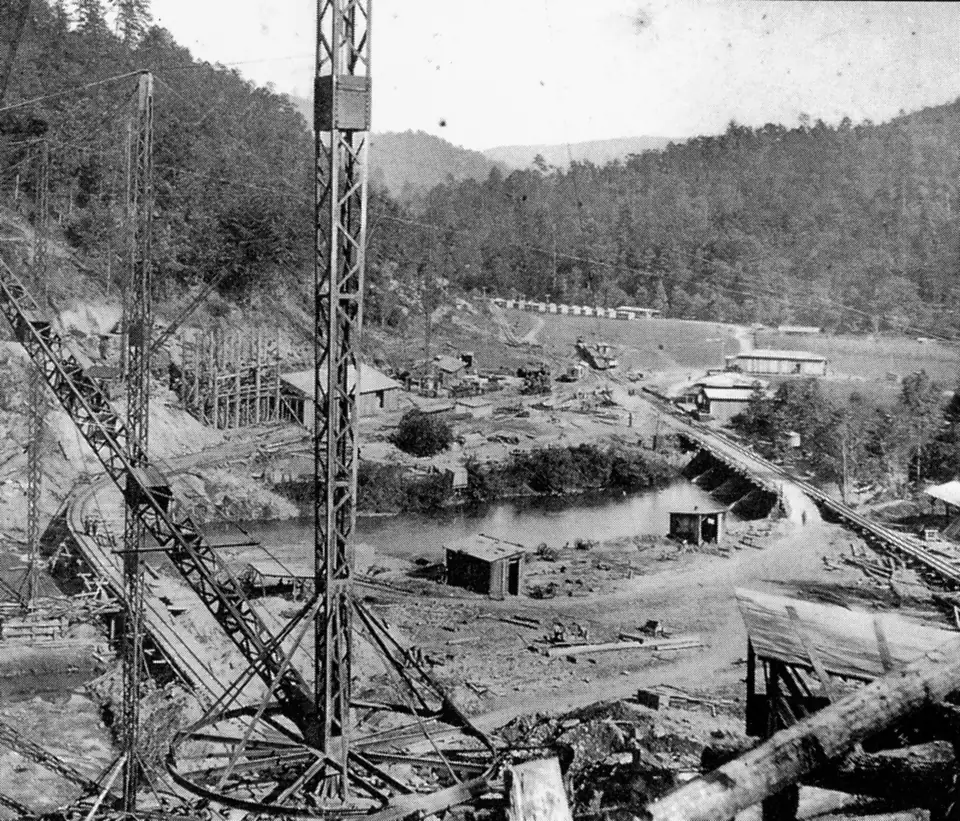
Burton Dam was not built to make electricity. The Historical Society says it was planned as a storage and flow-regulating dam for the Tallulah Falls plant, about 20 miles downstream, which had been built several years earlier. Its first job was to keep water moving to the turbines at Tallulah Falls.
That explains the pair of dates you will see attached to Burton:
- 1917: Georgia Railway and Power starts buying the town and the land around it.
- December 1919: the 128-foot-high dam is finished.
- August 1920: the reservoir is completely full, and Burton is under the lake.
- 1927: the powerhouse at the foot of the dam is completed, rated at 6,120 kilowatts, the second-smallest of the six plants.
All four dates come from the Historical Society. The National Inventory of Dams lists 1927 as Burton’s year completed, which matches the powerhouse rather than the dam. So when a source gives 1927 as the date for Lake Burton, it is counting the powerhouse. The dam itself dates to 1919, and the water was over the town by the summer of 1920.
The Historical Society says the Burton powerhouse was not finished until 1927, with an original output of 6,120 kilowatts. The National Inventory of Dams gives 1927 as the year completed. (Rabun County Historical Society; NID, checked Oct 18, 2026)
Under about 65 feet of water
The Historical Society describes the town of Burton as completely submerged under 2,775-acre Lake Burton, and puts it under about 65 feet of water. That is the depth over the old town, not a depth for the lake as a whole. No agency we checked publishes a maximum depth for Lake Burton, so we do not print one.
At least one Lake Burton business traces its site to the dam years. LaPrade’s Marina says its site was first used as a home for the men who built the dam, and later became a fishing retreat with a shared dining room. That is the marina’s own account rather than a historical record, but it fits the timeline.
The steeple story
You may hear that a church steeple from Burton floated on the new lake for a time after the water rose. It is a good story and it gets retold often, but we could not confirm it in a primary source. Treat it as local lore. The same goes for colorful details about the town’s size; we leave those out until a record supports them.
Atlanta got the power first
Every one of the six plants sent its power to Atlanta. Rabun County, whose rivers made that power, was not fully electrified until the 1950s, the Historical Society says. For a generation after the last plant came online in 1927, the county that hosted the dams was still not fully wired.
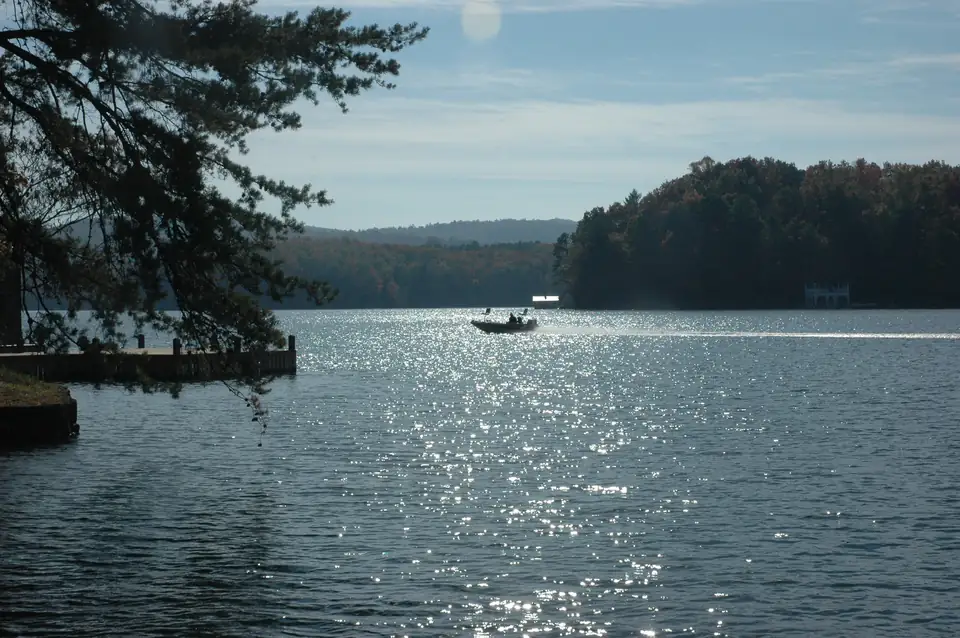
The trade was plain enough. A mountain county gave up a town and thousands of acres, and the electricity went south to the city. Lake Burton, the lake people now come to for boating, fishing and quiet coves, is what was left on the county’s side of that bargain.
Lake Burton today
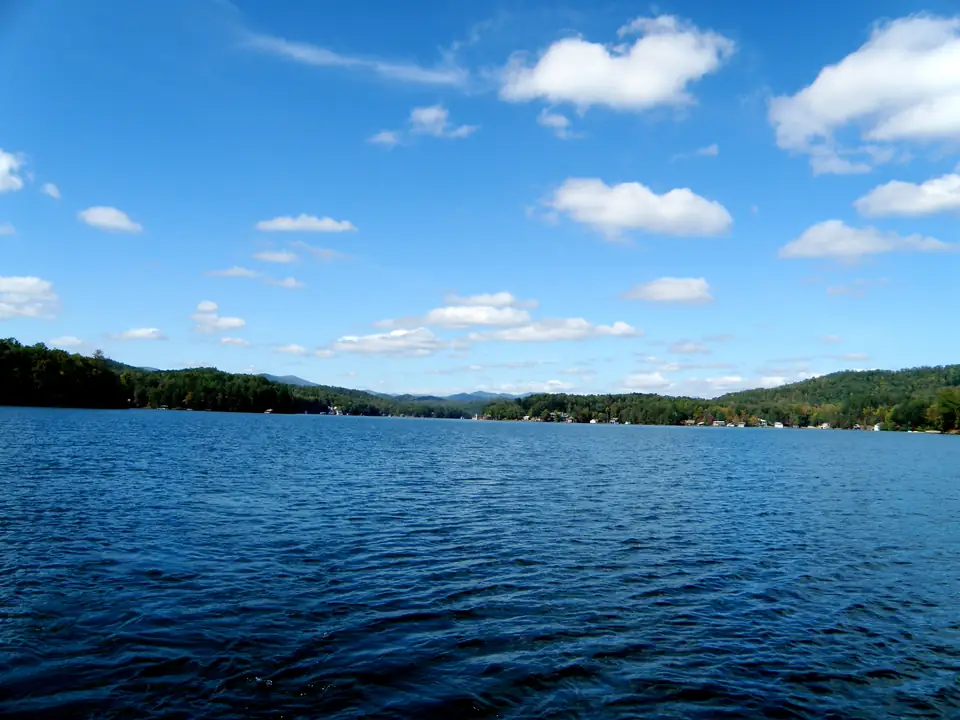
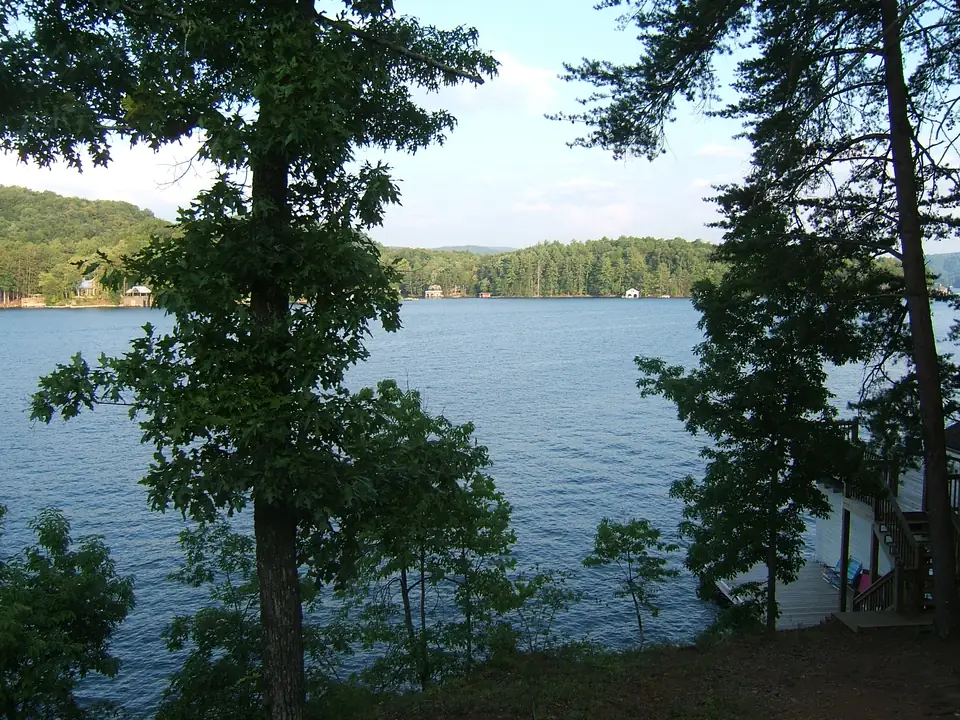
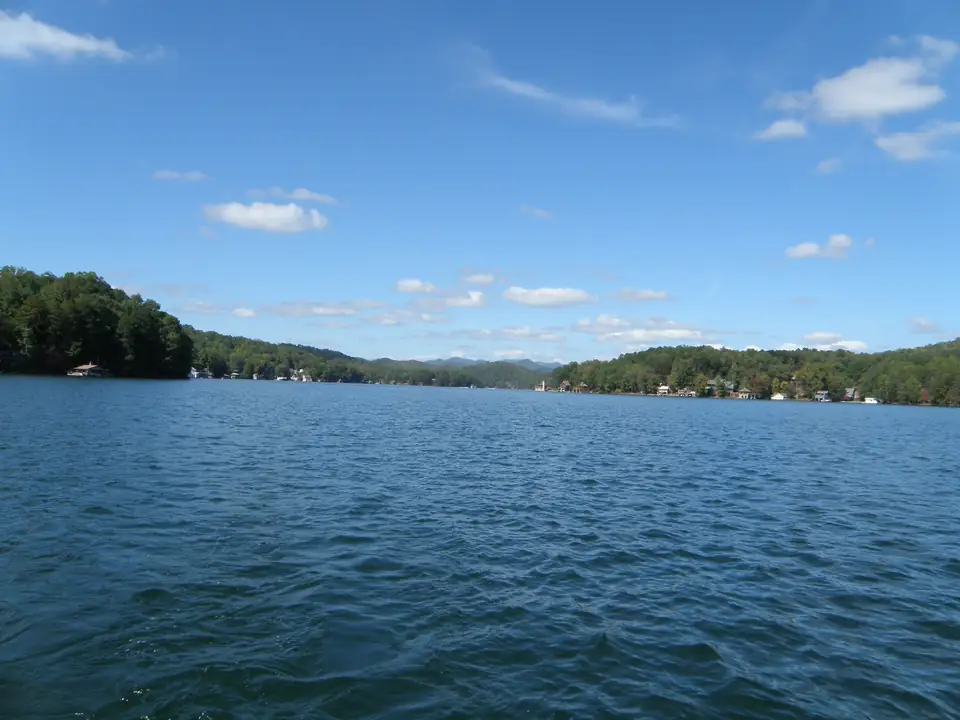
The reservoir that covered Burton is a 2,775-acre lake with a full pool elevation of 1,866.6 feet, according to Georgia Power’s federal license filing. Georgia Power’s daily lake-level table uses the same 1,866.6-foot full-pool figure. Lake Burton is the Burton development of Georgia Power’s North Georgia Project (FERC Project No. 2354), and it is still the uppermost of the six lakes.
The powerhouse that started at 6,120 kilowatts in 1927 is listed by Georgia Power at 8.1 MW today, part of its North Georgia Hydro Group. The dam is also getting new hardware. In a 2025 FERC notice, Georgia Power asked to replace Burton Dam’s spillway gates with an Obermeyer gate system. The work is done behind a bulkhead, so Georgia Power says no drawdown is required, and it was expected to begin in 2026 and take 18 to 24 months.
The water level moves below full pool through the year. For today’s posted reading and what it means at the docks and ramps, see our Lake Burton level page, and for the difference between full pool and a normal day, read Lake Burton full pool, explained. To find the dam, the parks and the public ramps, use our Lake Burton map.
Where this story comes from
Most of what is known about Burton’s sale and flooding comes from the Rabun County Historical Society’s article “Electricity for Atlanta,” by Richard Cinquina, first published in July 2020. We used it for the 1917 purchases, the 65 sellers, the 65 feet of water, the 1919 and 1920 dates, the 1927 powerhouse and the 1950s electrification. The federal license filing, the dam inventory and Georgia Power’s own pages supply the modern figures. Our Lake Burton history page lays out the full timeline, and the Lake Burton journal has more stories from the lake.
Questions about Burton, Georgia
What town is under Lake Burton?
The town of Burton, in Rabun County, Georgia. Georgia Railway and Power, a predecessor of Georgia Power, began buying it and the land around it in 1917, 65 property owners sold, and the Rabun County Historical Society says the town now lies under about 65 feet of water.
Source: Rabun County Historical Society, checked Oct 18, 2026
When was Lake Burton built?
Burton Dam was finished in December 1919 and the lake was completely full by August 1920, according to the Rabun County Historical Society. The powerhouse was not completed until 1927, which is the year the National Inventory of Dams lists as completed.
Source: Rabun County Historical Society, checked Oct 18, 2026
Why was Burton Dam built?
The Rabun County Historical Society says Burton Dam was first built to store and regulate water for the Tallulah Falls power plant downstream, not to generate power itself. Its own powerhouse came later, in 1927.
Source: Rabun County Historical Society, checked Oct 18, 2026
Did Rabun County get power from the Tallulah River dams?
Not at first. The six dams built between 1913 and 1927 sent all their power to Atlanta, and the Rabun County Historical Society says Rabun County itself was not fully electrified until the 1950s.
Source: Rabun County Historical Society, checked Oct 18, 2026
Written by the Visit Lake Burton Editorial Team. AI tools help us draft; people check every fact before it publishes.