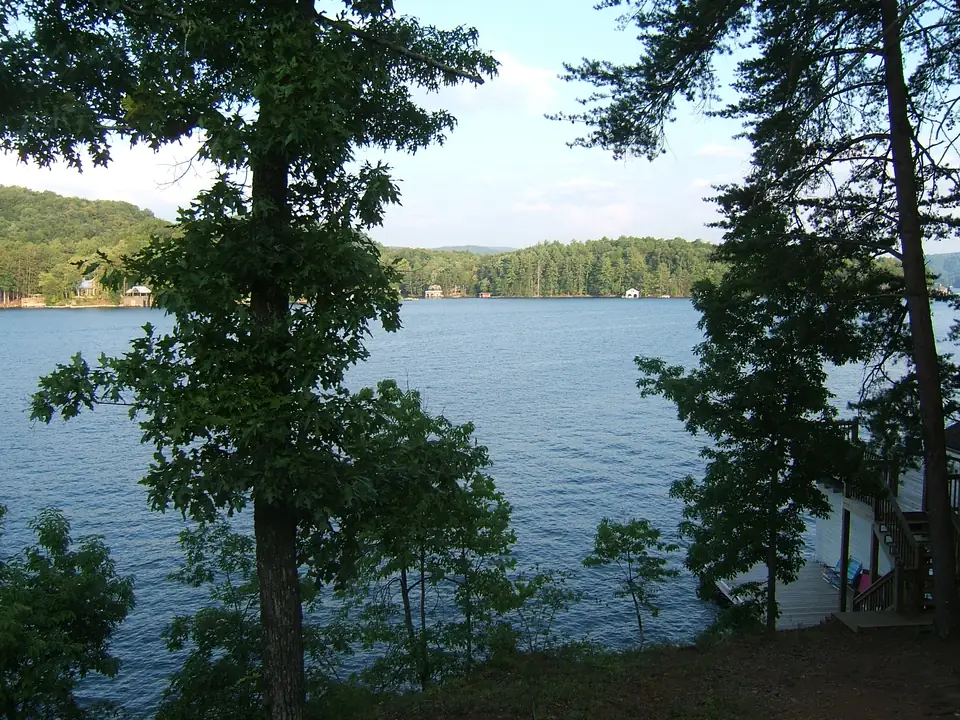

On Lake Burton, Georgia Power’s rules decide what you can keep and build at the water. Georgia Power owns the dam and much of the land at the water’s edge, and every lakefront property needs a signed agreement with Georgia Power, whether the lot is leased or deeded. This page sums up Georgia Power’s pages and its North Georgia Shoreline Guidelines as checked in October 2026; Georgia Power says the guidelines can be revised.
This is not legal advice. Before you buy, sell or build, call Georgia Power’s North Georgia Lakes Resources Office, 4 Seed Lake Road, Lakemont, at 706-746-1450.
Decision tool
Check a Lake Burton lot against Georgia Power's rules
Answer what you know about a lot. You'll see the Georgia Power shoreline rules that apply to it, each with its source. Every rule is listed below even before you answer.
-
Every lot
Every lot on the lake:
Sign Georgia Power's agreement first. No permit is issued, and no existing dock is confirmed as valid, until the owners sign a legal agreement with Georgia Power.
Source: Georgia Power, checked Oct 18, 2026
-
Every lot
Every lot on the lake:
One shoreline structure per lot. A dock, a boathouse, a slip or one connected combination, reached by a single walkway.
Source: Georgia Power shoreline guidelines, checked Oct 18, 2026
-
Every lot
Every lot on the lake:
Leave the 25-foot buffer alone. Clearing or regrading inside the 25-foot vegetative buffer needs written approval first, and unauthorized clearing can cost an owner the dock or boathouse.
Source: Georgia Power shoreline guidelines, checked Oct 18, 2026
-
Lease lot
If it is a lease lot:
The lease is 15 years and moves at closing. Georgia Power leases run 15 years, not 99. The transfer happens together with closing and takes three to four weeks; call the lake office once you are under contract.
Source: Georgia Power, checked Oct 18, 2026
-
Lease lot
If it is a lease lot:
You pay the lot's property tax. The tax is billed to the lessee, and the Georgia Department of Revenue sets the lot value.
Source: Georgia Power, checked Oct 18, 2026
-
Access lot
If it is an access lot:
The strip by the water is not yours. Georgia Power's shoreline strip is not in your deed, and no part of the house, a pool, an outdoor kitchen or a fire pit may cross onto it.
Source: Georgia Power, checked Oct 18, 2026
-
Private lot
If you own to the water:
Georgia Power still has rights. It keeps its project-boundary rights and may hold flood rights that limit structures. Anything in the lake still needs an agreement with Georgia Power.
Source: Georgia Power, checked Oct 18, 2026
-
Not sure
If you are not sure of the lot type:
Ask before you offer. Georgia Power describes three kinds of lots, each with different rights and fees. The lake office can tell you which one a lot is.
Source: Georgia Power, checked Oct 18, 2026
-
Dock
Platted after 2000 with 100 ft or more of shoreline:
Enough shoreline for a structure. Lots platted after 2000 need at least 100 feet of straight-line shoreline for any shoreline structure other than a seawall.
Source: Georgia Power shoreline guidelines, checked Oct 18, 2026
-
No dock
Platted after 2000 with under 100 ft of shoreline:
Too little shoreline for a dock or boathouse. Lots platted after 2000 need at least 100 feet of straight-line shoreline for any structure other than a seawall.
Source: Georgia Power shoreline guidelines, checked Oct 18, 2026
-
Dock
Platted before 2000 with 50 ft or more of shoreline:
The lot can be considered for a dock. Lots platted before 2000 need at least 50 feet of shoreline to be considered for a dock.
Source: Georgia Power shoreline guidelines, checked Oct 18, 2026
-
No dock
Platted before 2000 with under 50 ft of shoreline:
Below the dock minimum. Lots platted before 2000 need at least 50 feet of shoreline to be considered for a dock.
Source: Georgia Power shoreline guidelines, checked Oct 18, 2026
-
Dock size
If you want a dock:
16 by 20 feet at most. 320 square feet, reaching no more than 50 feet from shore or a third of the way across a cove, and at least 15 feet from the projected property line.
Source: Georgia Power shoreline guidelines, checked Oct 18, 2026
-
Boathouse
If you want a boathouse:
One boathouse, two stalls, no living space. One per lot with at most two stalls, never built or renovated for living in, with no plumbing or permanent appliances.
Source: Georgia Power shoreline guidelines, checked Oct 18, 2026
-
No boathouse
A boathouse on a lot with no house:
Build the house first. A house must be on the lot before Georgia Power approves any shoreline structure other than a dock or seawall.
Source: Georgia Power shoreline guidelines, checked Oct 18, 2026
-
Boathouse
A boathouse on a lot platted after 2000:
100 feet of shoreline and 100 feet of width. The lot also needs 100 feet of width at Georgia Power's project boundary.
Source: Georgia Power shoreline guidelines, checked Oct 18, 2026
-
Existing home
If there is a house now:
Check how close it sits to the water. Homes inside the project boundary or within 50 feet of the shoreline are "as is": they can be kept up but not enlarged. Georgia Power advises calling the lake office before buying.
Source: Georgia Power, checked Oct 18, 2026
-
New home
If you plan to build a home:
Build at least 50 feet back. New construction, decks included, must be outside the project boundary and at least 50 feet from the shoreline, or farther if the county requires it.
Source: Georgia Power shoreline guidelines, checked Oct 18, 2026
Talk to Gold Peach Realty about a Lake Burton lot
From Georgia Power's North Georgia Shoreline Guidelines and its buying, selling and leasing pages, checked October 18, 2026. This compares your answers with Georgia Power's published thresholds; it is not legal advice or a permit decision. Call Georgia Power's lake office at 706-746-1450 before you buy, sell or build.
Three kinds of lake lots
- Lease lot. Georgia Power owns the land. You own the house and the shoreline structures, and you pay an annual fee.
- Access lot. You own your lot by deed, but Georgia Power owns a strip of land between it and the lake. You pay an annual fee. The strip is not in your warranty deed, Georgia Power has absolute authority over it, and no part of the house, pool, outdoor kitchen or fire pit may cross onto it.
- Privately owned lot. You own down to the lake’s high-water mark. Georgia Power still keeps at least its project boundary rights and may hold flood rights or a flood easement that limits structures.
Many Lake Burton homes sit on lease lots; others are access or privately owned lots. Confirm the lot type for any address with the lake office. Our article on leased lot or deeded goes further.
The agreement every owner signs
Georgia Power’s federal license requires it to control the lake and its project lands, so even deeded owners sign an agreement that authorizes their docks, boathouses and seawalls on Georgia Power property, per its lake FAQ.
Georgia Power won’t accept scans or e-signatures by email. Owners sign the originals in front of a notary and a witness, and the documents are recorded at the county courthouse.
Georgia Power won't issue permits to new owners, or confirm that existing shoreline structures are valid, until the owners sign a legal agreement with Georgia Power. Every property on a Georgia Power lake needs one. (Georgia Power, checked Oct 18, 2026)
Leases: 15 years, transferred at closing
Georgia Power’s residential lake leases run for 15 years. It does not issue 99- or 100-year leases. A buyer should call the lake office as soon as they are under contract: the lease transfer must happen together with closing, takes three to four weeks, and may require a new as-built survey. Sellers should ask for a pre-transfer inspection, covered on our selling page.
| Item | Cost or rule | Source |
|---|---|---|
| Lease term | 15 years | Georgia Power FAQ |
| Early lease renewal | $250, paid when the new lease is signed | Georgia Power |
| Lease into an LLC or trust | $500, paid when the new lease is signed | Georgia Power |
| Construction permit | No fee, but none issued while agreement fees are behind | Georgia Power |
On a lease lot the property tax is billed to you, the lessee. The Georgia Department of Revenue, not the county, sets the lot values, and Georgia Power says lessees get no income tax deduction for the lot tax.
Permits
Every homeowner needs a valid Georgia Power permit before any work on Georgia Power land, on lease lots and deeded properties alike. Building or maintaining a dock, boathouse, seawall or shelter takes a written construction permit, and on a lease lot so does any work on the house or outbuildings. Local building and zoning goes through Rabun County Planning & Zoning, 706-782-1579.
Docks and frontage
- One shoreline structure per lot: a dock, a boathouse, a boat slip or a combination, connected to shore by a single walkway.
- A dock may be at most 16 by 20 feet (320 square feet), with variations possible in some cases.
- It should reach no more than 50 feet from shore, no more than one-third of the way across a cove, and stay at least 15 feet from the projected property line.
- The flag dock is the standard design for new docks.
- The only plumbing allowed is a water spigot. Freestanding boatlifts go only inside a boathouse slip; up to two personal watercraft lifts are allowed.
Frontage decides whether you get a structure at all. A lot platted or surveyed after 2000 needs at least 100 feet of straight-line (pin-to-pin) shoreline for any structure other than a seawall. A lot platted before 2000 needs at least 50 feet to be considered for a dock. And on lease and private lots alike, a house must be on the lot before Georgia Power approves anything other than a dock or seawall.
Boathouses
One boathouse per lot, with at most two stalls, no matter how much frontage you have. On a lot platted after 2000 it needs 100 feet of straight-line shoreline and 100 feet of width at the project boundary. A boathouse can’t be built or renovated as living space, and plumbing, permanent appliances and hard gas lines from shore are not allowed.
| Boathouse type | Maximum size (exterior walls) |
|---|---|
| Single stall | 14 x 32 ft |
| Single stall with dock | 30 x 32 ft overall |
| Double stall | 28 x 32 ft |
| Double stall with dock | 44 x 36 ft overall |
The peak can be no more than 32 feet above the lake’s normal operating level, chimneys and weathervanes included, and the platform should sit at least 24 inches above normal level.
The 25-foot buffer and your trees
Grubbing, regrading or other mechanical clearing inside the 25-foot vegetative buffer, or on Georgia Power land, needs prior written approval. The Georgia EPD state-waters buffer is 25 feet for warm waters and 50 feet for cold waters, and you need every permit before working in it. Removing a tree on Georgia Power land takes a permit and 1-to-1 replanting.
Unauthorized clearing within 25 feet of the shoreline or on Georgia Power land can cost an owner their dock or boathouse: Georgia Power may require the structures be removed at the owner's expense, plus a replanting plan and a pause on new permits. (Georgia Power shoreline guidelines, checked Oct 18, 2026)
The house: as-is homes and setbacks
Existing homes inside the project boundary or within 50 feet of the shoreline have “as is” status, per Georgia Power’s dwellings and additions sheet. They can be maintained with cosmetic changes but can’t be expanded to add livable square footage. Some older lease-lot homes may not be rebuildable where they stand.
New construction, raised decks included, must be outside the project boundary and at least 50 feet from the shoreline, or farther if the county’s setback is greater. A new home that can’t go outside the boundary must be at least 75 feet back and needs FERC approval. Homes are limited to two stories above ground, one per lot. A lease lot may also have up to two one-story outbuildings, 1,156 square feet total, behind the house, with no living space or interior plumbing.
Other shoreline rules
- Combining lots: check with Georgia Power first; if both lots have structures other than seawalls, all but one must come out.
- Seawalls: new ones only where there is visible cut-bank erosion, never where wetlands are present, with county and state permits and riprap on the lake side.
- Dredging: Georgia Power can permit up to 500 cubic yards per property. Larger jobs also need federal approvals, including FERC.
- Lighting and solar: no floodlights or underwater lights; low-voltage lights shielded downward; no solar panels inside the project boundary.
- Swim buoys: Memorial Day through Labor Day only, two per lot, within 50 feet of shore and not past your structure. Nothing that looks like a regulatory marker.
- Fences and beaches: no fences inside the project boundary or beside the lake, no man-made beaches, and no sand added to a natural one.
Before you buy
- Get the address and confirm the lot type with the lake office (706-746-1450; email gpcnglandmgt@southernco.com).
- Ask the seller for the Georgia Power agreement or lease and the permits for every shoreline structure.
- Call the lake office as soon as you are under contract, so the transfer can close on time.
Browse current Lake Burton homes with these questions in hand, or read how Gold Peach Realty works with lake buyers and sellers.
Office
Georgia Power North Georgia Lakes Resources Office
Georgia Power's lake office for Lake Burton and the other North Georgia lakes. It handles shoreline permits, lease transfers, pre-transfer inspections and owner agreements. Office hours are not published for this office.
- Construction permits are free; lease and agreement fees vary
- 4 Seed Lake Road, Lakemont, GA 30552 (Rabun County, Georgia)
- 706-746-1450
Source: Georgia Power, checked Oct 18, 2026
Questions people ask
Are Lake Burton lots leased or deeded?
Both exist. Georgia Power describes three lot types: lease lots, where it owns the land and you own the house; access lots, where it owns a strip between your deeded lot and the lake; and privately owned lots, owned to the high-water mark. Lease and access lots carry an annual fee.
Source: Georgia Power, checked Oct 18, 2026
How long is a Georgia Power lake lease?
Georgia Power's residential lake leases run for 15 years. It does not issue 99- or 100-year leases.
Source: Georgia Power FAQ, checked Oct 18, 2026
How big can a dock be on Lake Burton?
Georgia Power's North Georgia guidelines cap a dock at 16 by 20 feet (320 square feet), with variations in some cases. It should reach no more than 50 feet from shore or one-third of the way across a cove, and stay 15 feet from the projected property line.
Source: Georgia Power shoreline guidelines, checked Oct 18, 2026
How much shoreline do I need for a dock on Lake Burton?
A lot platted or surveyed after 2000 needs at least 100 feet of straight-line shoreline for any structure other than a seawall. A lot platted before 2000 needs at least 50 feet to be considered for a dock.
Source: Georgia Power shoreline guidelines, checked Oct 18, 2026
Can I clear trees for a lake view?
Not without Georgia Power's written approval. Unauthorized clearing within 25 feet of the shore or on Georgia Power land can lead Georgia Power to require removal of your dock or boathouse at your expense, plus a replanting plan and a pause on new permits.
Source: Georgia Power shoreline guidelines, checked Oct 18, 2026
Can I expand an older house close to the water?
Usually not. Homes inside the project boundary or within 50 feet of the shoreline have "as is" status: they can be maintained with cosmetic changes but can't add livable square footage. Call the lake office at 706-746-1450 before buying.
Source: Georgia Power, checked Oct 18, 2026