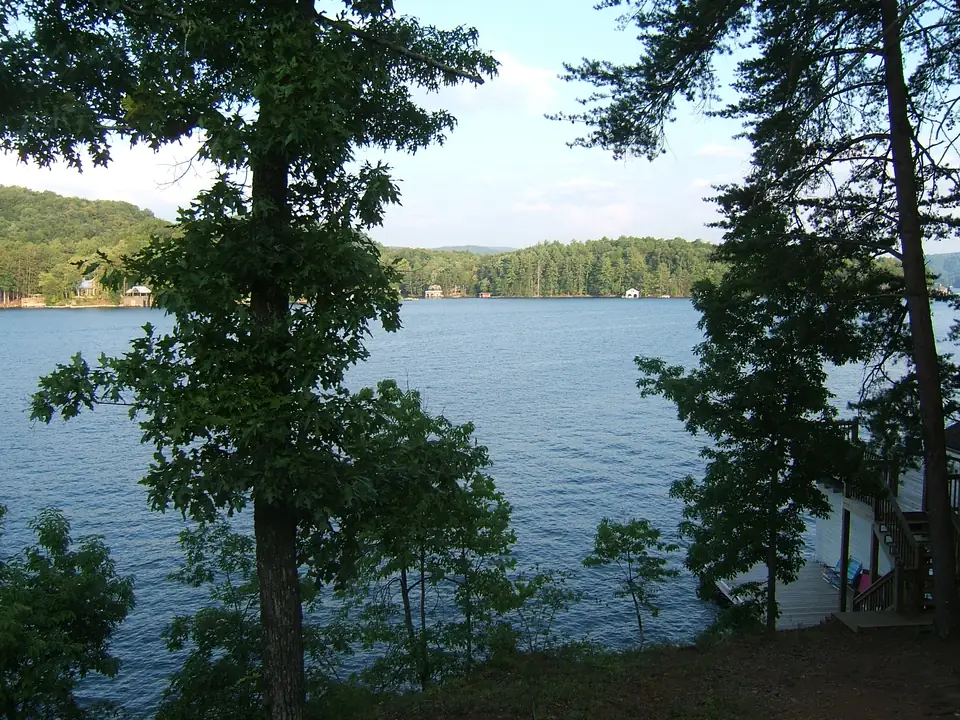
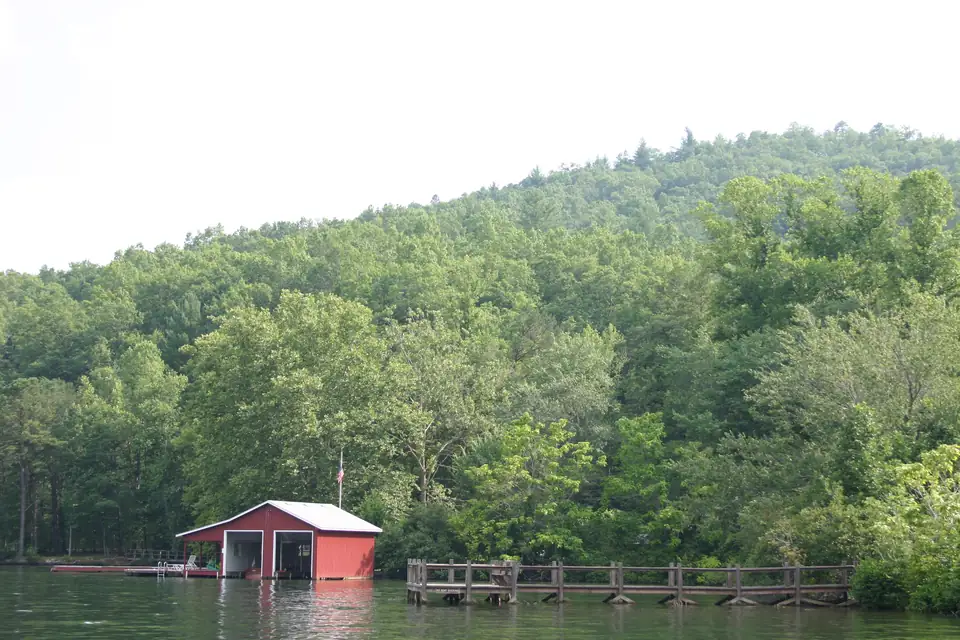
Before you buy a home on Lake Burton, in Rabun County, Georgia, check whether it touches the lake, which Georgia Power lot type it sits on, and what paperwork covers its dock. Buying on Lake Burton means buying on a Georgia Power lake, and Georgia Power’s rules decide what you can keep and build at the water, so check those before you compare kitchens. We checked the rules below with Georgia Power in October 2026.
Is the home lakefront, lake access or lake view?
Listings use the lake’s name loosely. A “Lake Burton” address, neighborhood name or photo of the water does not mean the property reaches the shore. Read each listing for one of three things:
- Lakefront. The lot meets the lake, or meets a Georgia Power strip at the lake’s edge. This is the only kind that can be considered for its own dock.
- Lake access. The home has some way to reach the water, but no shoreline of its own. Ask exactly what the access is and who controls it.
- Lake view. You can see the water. That’s all the description promises.
Georgia Power’s own term “access lot” means something different: a lakefront home where you own the lot by deed but Georgia Power owns a strip of land between it and the lake. That strip is not in your warranty deed, and no part of the house, pool, outdoor kitchen or fire pit may cross onto it. Don’t confuse a Georgia Power access lot with a listing marketed as “lake access”.
Which Georgia Power lot type does the home sit on?
Georgia Power describes three kinds of lake lots: a lease lot, where Georgia Power owns the land and you own the house and shoreline structures; an access lot; and a privately owned lot, where you own down to the high-water mark. Lease and access lots carry an annual fee. Leases run 15 years, not 99. Our guide to owning a Lake Burton home explains each type, and our article on leased lot or deeded compares them.
Use the lot checker to see which shoreline rules apply to a listing you’re considering:
Decision tool
Check a Lake Burton lot against Georgia Power's rules
Answer what you know about a lot. You'll see the Georgia Power shoreline rules that apply to it, each with its source. Every rule is listed below even before you answer.
-
Every lot
Every lot on the lake:
Sign Georgia Power's agreement first. No permit is issued, and no existing dock is confirmed as valid, until the owners sign a legal agreement with Georgia Power.
Source: Georgia Power, checked Oct 18, 2026
-
Every lot
Every lot on the lake:
One shoreline structure per lot. A dock, a boathouse, a slip or one connected combination, reached by a single walkway.
Source: Georgia Power shoreline guidelines, checked Oct 18, 2026
-
Every lot
Every lot on the lake:
Leave the 25-foot buffer alone. Clearing or regrading inside the 25-foot vegetative buffer needs written approval first, and unauthorized clearing can cost an owner the dock or boathouse.
Source: Georgia Power shoreline guidelines, checked Oct 18, 2026
-
Lease lot
If it is a lease lot:
The lease is 15 years and moves at closing. Georgia Power leases run 15 years, not 99. The transfer happens together with closing and takes three to four weeks; call the lake office once you are under contract.
Source: Georgia Power, checked Oct 18, 2026
-
Lease lot
If it is a lease lot:
You pay the lot's property tax. The tax is billed to the lessee, and the Georgia Department of Revenue sets the lot value.
Source: Georgia Power, checked Oct 18, 2026
-
Access lot
If it is an access lot:
The strip by the water is not yours. Georgia Power's shoreline strip is not in your deed, and no part of the house, a pool, an outdoor kitchen or a fire pit may cross onto it.
Source: Georgia Power, checked Oct 18, 2026
-
Private lot
If you own to the water:
Georgia Power still has rights. It keeps its project-boundary rights and may hold flood rights that limit structures. Anything in the lake still needs an agreement with Georgia Power.
Source: Georgia Power, checked Oct 18, 2026
-
Not sure
If you are not sure of the lot type:
Ask before you offer. Georgia Power describes three kinds of lots, each with different rights and fees. The lake office can tell you which one a lot is.
Source: Georgia Power, checked Oct 18, 2026
-
Dock
Platted after 2000 with 100 ft or more of shoreline:
Enough shoreline for a structure. Lots platted after 2000 need at least 100 feet of straight-line shoreline for any shoreline structure other than a seawall.
Source: Georgia Power shoreline guidelines, checked Oct 18, 2026
-
No dock
Platted after 2000 with under 100 ft of shoreline:
Too little shoreline for a dock or boathouse. Lots platted after 2000 need at least 100 feet of straight-line shoreline for any structure other than a seawall.
Source: Georgia Power shoreline guidelines, checked Oct 18, 2026
-
Dock
Platted before 2000 with 50 ft or more of shoreline:
The lot can be considered for a dock. Lots platted before 2000 need at least 50 feet of shoreline to be considered for a dock.
Source: Georgia Power shoreline guidelines, checked Oct 18, 2026
-
No dock
Platted before 2000 with under 50 ft of shoreline:
Below the dock minimum. Lots platted before 2000 need at least 50 feet of shoreline to be considered for a dock.
Source: Georgia Power shoreline guidelines, checked Oct 18, 2026
-
Dock size
If you want a dock:
16 by 20 feet at most. 320 square feet, reaching no more than 50 feet from shore or a third of the way across a cove, and at least 15 feet from the projected property line.
Source: Georgia Power shoreline guidelines, checked Oct 18, 2026
-
Boathouse
If you want a boathouse:
One boathouse, two stalls, no living space. One per lot with at most two stalls, never built or renovated for living in, with no plumbing or permanent appliances.
Source: Georgia Power shoreline guidelines, checked Oct 18, 2026
-
No boathouse
A boathouse on a lot with no house:
Build the house first. A house must be on the lot before Georgia Power approves any shoreline structure other than a dock or seawall.
Source: Georgia Power shoreline guidelines, checked Oct 18, 2026
-
Boathouse
A boathouse on a lot platted after 2000:
100 feet of shoreline and 100 feet of width. The lot also needs 100 feet of width at Georgia Power's project boundary.
Source: Georgia Power shoreline guidelines, checked Oct 18, 2026
-
Existing home
If there is a house now:
Check how close it sits to the water. Homes inside the project boundary or within 50 feet of the shoreline are "as is": they can be kept up but not enlarged. Georgia Power advises calling the lake office before buying.
Source: Georgia Power, checked Oct 18, 2026
-
New home
If you plan to build a home:
Build at least 50 feet back. New construction, decks included, must be outside the project boundary and at least 50 feet from the shoreline, or farther if the county requires it.
Source: Georgia Power shoreline guidelines, checked Oct 18, 2026
Talk to Gold Peach Realty about a Lake Burton lot
From Georgia Power's North Georgia Shoreline Guidelines and its buying, selling and leasing pages, checked October 18, 2026. This compares your answers with Georgia Power's published thresholds; it is not legal advice or a permit decision. Call Georgia Power's lake office at 706-746-1450 before you buy, sell or build.
What documents should you ask for before buying a Lake Burton home?
Ask the seller or listing agent for these before you make an offer:
- The Georgia Power agreement or lease. Every property on the lake needs one. On a lease lot, confirm the term and when it renews.
- Permits for the dock, boathouse and seawall. Every shoreline structure needs a written Georgia Power construction permit.
- A survey. It should show where the deeded lot ends and any Georgia Power strip begins. Georgia Power may require a new as-built survey for a lease transfer.
- The results of a pre-transfer inspection. Georgia Power tells sellers to request one, and it can turn up compliance issues.
- The property tax bill. On a lease lot the tax is billed to the lessee, and the Georgia Department of Revenue sets the lot value.
An existing dock is not automatically yours to keep using. Georgia Power won’t confirm that existing shoreline structures are valid, or issue a new owner any permit, until that owner signs an agreement with Georgia Power.
A buyer of a home on a Georgia Power lease lot should call the lake office as soon as they are under contract. The lease transfer must happen together with closing and takes three to four weeks. A new as-built survey may be required. (Georgia Power, checked Oct 18, 2026)
What shoreline rules affect a lakefront home’s dock, house and trees?
- Frontage. A lot platted after 2000 needs at least 100 feet of straight-line shoreline for any structure other than a seawall. A lot platted before 2000 needs at least 50 feet to be considered for a dock.
- The house. Homes inside the project boundary or within 50 feet of the shore are “as is”: cosmetic changes only, no added living space, per Georgia Power’s dwellings guidance.
- The trees. Clearing inside the 25-foot buffer without approval can cost an owner their dock or boathouse.
- The boat. Georgia law bans motorized boats longer than 30 feet 6 inches on Lake Burton. See boating rules before you size a boathouse.
Georgia Power warns that some existing homes on leased lots no longer meet its guidelines and may not be expandable or rebuildable where they stand. It advises calling the Lake Resources Office before buying, selling or renovating. (Georgia Power, checked Oct 18, 2026)
Featured Lake Burton homes
These homes are listed with Gold Peach Realty, the North Georgia brokerage that publishes this guide. Before you tour one, ask which Georgia Power lot type it sits on and request the documents above.
Gold Peach Realty listings
Featured homes from Gold Peach Realty
Current listings from Gold Peach Realty, the North Georgia brokerage behind this guide. Rabun County homes listed with us are shown first; the rest are our other North Georgia listings. Photos, prices and details come from the MLS. A listing shown here is not necessarily on the lake: check each one for lakefront, lake access or lake view.
Want your home featured here? List with Gold Peach Realty and your home is featured on this guide and across our North Georgia community sites. How Gold Peach Realty markets homes
Search Lake Burton and Rabun County homesListings open on goldpeachrealty.com, the website of our brokerage, Gold Peach Realty. Listing information is deemed reliable but not guaranteed.
What should you do before you make an offer?
- Confirm the lot type and the structures on file with Georgia Power’s North Georgia Lakes Resources Office, 706-746-1450.
- Check local building and zoning with Rabun County Planning & Zoning, 706-782-1579.
- Call the lake office again as soon as you are under contract. The lease transfer happens at closing and takes three to four weeks.
Selling instead? Read selling a Lake Burton home. New to the lake? Start with the Lake Burton map.
Questions people ask
Is every Lake Burton listing on the lake?
No. Homes marketed as lake access or lake view may have no shoreline of their own. Even a lakefront home may be on a Georgia Power access lot, where Georgia Power owns the strip between the deeded lot and the water.
Source: Georgia Power, checked Oct 18, 2026
What documents should I ask for when buying a Lake Burton home?
Ask for the Georgia Power agreement or lease and the permits for every dock, boathouse and seawall. Georgia Power won't confirm existing shoreline structures are valid for a new owner until that owner signs an agreement with it.
Source: Georgia Power, checked Oct 18, 2026
How long does a Lake Burton lease transfer take?
The lease transfer must happen together with closing and takes three to four weeks, and a new as-built survey may be required. Georgia Power says buyers should call the lake office as soon as they are under contract.
Source: Georgia Power, checked Oct 18, 2026
Who pays property tax on a Georgia Power lease lot?
The lessee. On Georgia Power lease lots the tax is billed to the lessee, the Georgia Department of Revenue sets the lot values, and lessees get no income tax deduction for the lot tax.
Source: Georgia Power, checked Oct 18, 2026
Do Georgia Power construction permits cost anything?
No, Georgia Power charges no fee for construction permits. It issues none unless the owner has a current agreement and is up to date on its fees.
Source: Georgia Power FAQ, checked Oct 18, 2026